



A Bronze Reminder
By Jerry Grimes
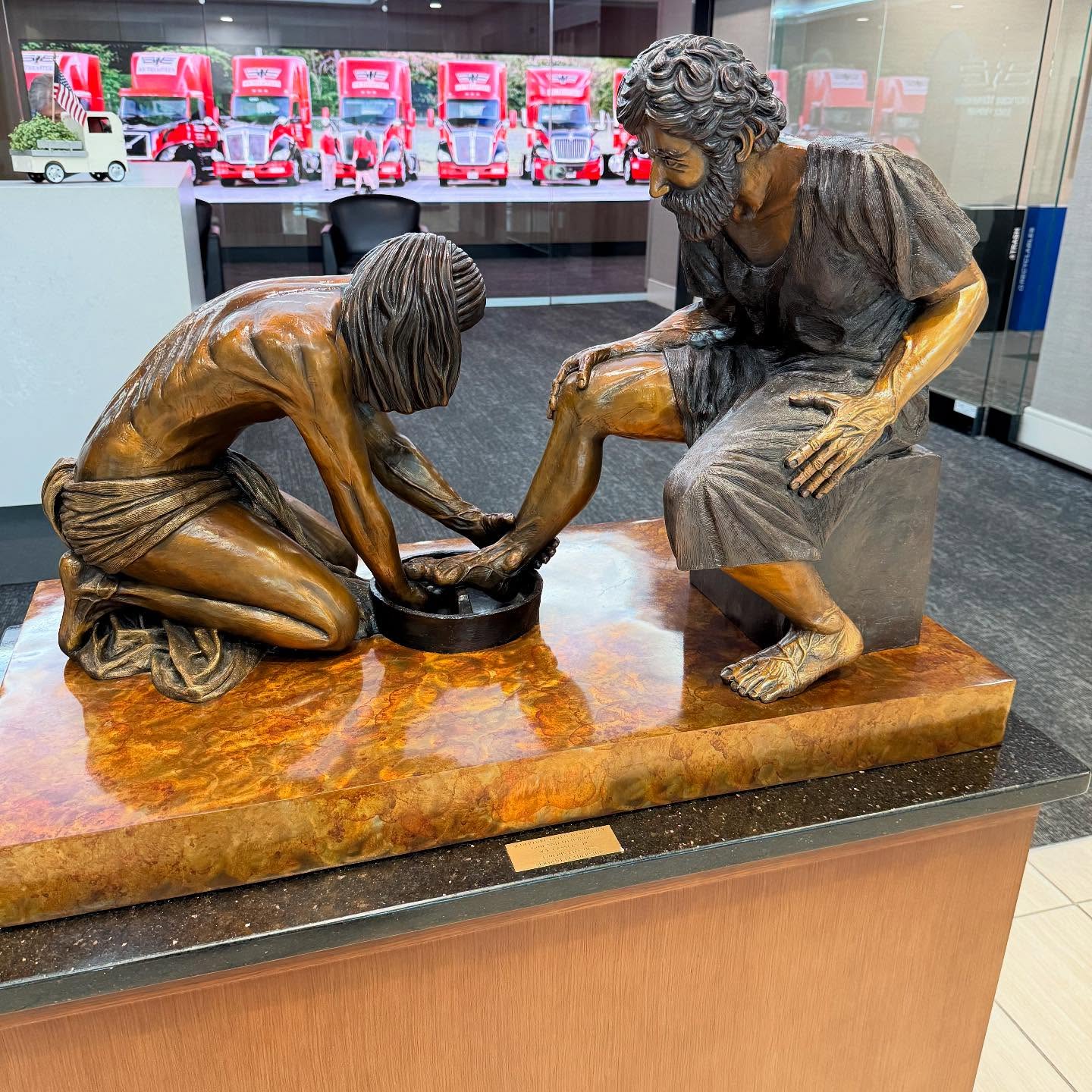
On the manicured grounds of Southeastern Freight Lines’ support center located here in the Midlands of South Carolina, visitors often pause as they pass through. There, just beyond the main entrance, a
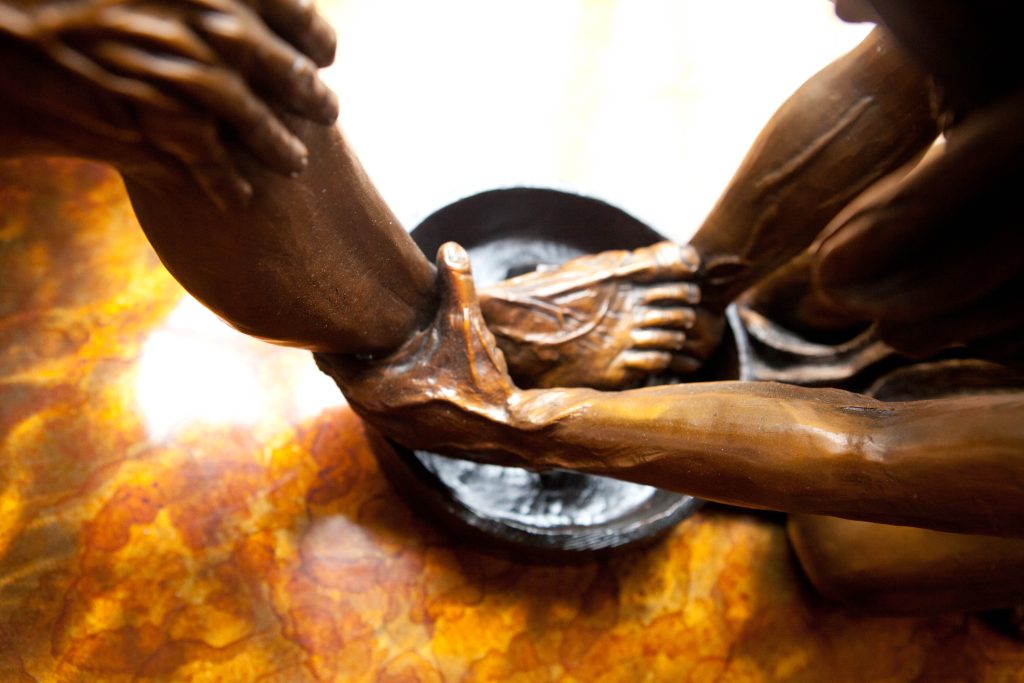
bronze figure kneels with towel and basin in hand, gently holding the foot of another man who looks equal parts startled and moved.
The sculpture entitled “The Divine Servant,” a life-size work by Texas artist Max Greiner, Jr., depicts Jesus washing the feet of the apostle Peter, a story described in the Bible’s Gospel of John. The scene—a revered teacher performing a servant’s task—has long been a touchstone for Christians, but at Southeastern Freight Lines (SEFL), it has also become an unlikely anchor for a thriving, modern freight company. “We’re in the transportation business, but we’ve always believed leadership is really about service,” says Tobin Cassels, CEO of SEFL. “This sculpture captures that better than any
plaque or mission statement could.”
Greiner created The Divine Servant decades ago as his first monumental bronze. Today, it is on display at colleges, hospitals, prayer gardens, and since 2012, at SEFL’s headquarters. Its placement is not tucked away in a lobby; it greets everyone arriving for work or meetings.
Cassels recalls why leadership chose this piece: “We wanted something that would silently tell our story. In business, it is easy to talk about humility and service, but those words can fade when deadlines
and pressures mount. A sculpture just stands there—steady, unchanging—and it challenges you every day.”
The bronze figures are slightly larger than life. Jesus kneels, intent on His task. Peter leans back, half resisting, half yielding. The towel and basin, simple tools of care, become symbols of leadership as servitude.
Although the image comes straight from Christian Scripture, Cassels is quick to point out that the statue’s message is broader than a single faith tradition. “Our company is deeply influenced by
Christian values, but we have people from many backgrounds here,” he says. “In all of my years here, no one has ever really complained about the statue. Everyone is inspired by it.”
For Cassels, that universal appeal lies in the idea of servant leadership, a term embraced in secular business circles as well as churches. “It’s not about titles or power,” he says. “It’s about using whatever influence you have to lift others up. That’s something people of any belief can respect.”
Southeastern Freight Lines has grown from a small regional carrier to one of the country’s most respected less-than-truckload providers, and Cassels believes servant leadership gives them
a competitive edge. “When leaders see themselves as servants, they listen more closely. They build safer workplaces. They coach instead of command,” he explains. “That makes teams stronger and customers feel cared for.”
“Our executives,” he adds, “must also remember the people who keep freight moving: You can’t make
decisions in a vacuum. You have to consider how choices affect the men and women on the dock or behind the wheel. That’s what the basin and towel say to me every morning.”
Younger employees often notice the statue on their first day. It sparks questions—and sometimes deep
reflection. Cassels has seen it happen: “A new hire will pause, and someone will explain the story. Right away, they get a glimpse of what leadership means here.”
In an era when corporate art often leans abstract, Southeastern chose something boldly narrative. “It’s
unmistakable,” Cassels says with a smile. “You don’t have to guess what it’s about.” He adds that the decision was deliberate: “We didn’t want something trendy. We wanted something timeless. Service and
humility never go out of style.”
Many corporate campuses display art for beauty or prestige. Southeastern wanted something more. “Art can teach,” Cassels says. “This piece tells a story every day without saying a word. It says: Around here, leadership means service.” Employees from different faiths and cultures have echoed that sentiment.
Some see Jesus; others simply see humility. Either way, Cassels says, “It’s hard to walk by and not feel called to lead a little differently.”
For SEFL, the sculpture is not just corporate décor; it is a witness to a set of values that transcend profit margins. It says something about how a company can succeed without losing its soul.
Freight is a high-pressure, ever- evolving industry—technology, fuel costs, and global supply chains can change overnight. Cassels believes the sculpture’s unchanging message helps keep the company grounded. “Markets shift, strategies shift, but character should not,” he says. “That bronze Jesus kneeling at Peter’s feet is a reminder that real success comes from how we treat people.”
When SEFL holds leadership meetings or milestone celebrations, the statue is often in view. It has become a backdrop for promotions and retirements—a silent reminder of what the company hopes its
leaders embody.
For Cassels, servant leadership is not soft or naïve; it is smart business. “When people feel valued and cared for, they stay, they give their best, and they take care of customers,” he says. “That’s how you
build resilience—through trust.”
He notes that this philosophy has helped SEFL weather economic swings and logistics crises alike. “We’ve faced tough times,” he says. “But when leaders serve and teams trust, you can adapt
without losing who you are.”
Although the statue sits on private grounds, it is visible enough that local passersby sometimes stop to take a look. Cassels welcomes that curiosity. “If someone sees it and thinks, ‘Maybe
leadership could be about helping, not just power,’ that’s a win—whether they ever work here or not,” he says.
Cassels sums up the statue’s purpose simply: “Every day it asks a question: Will you lead by serving? That’s a question worth asking—in business, in community, in life.” And then he smiles, recalling years of employees and visitors pausing at the bronze scene. “You know,” he says, “in all of my years here, no one has ever really complained about the statue. Everyone is inspired by it.”
About the Artist: Max Greiner, Jr., is a Texas-based sculptor known for public works with spiritual
themes. His pieces, including “The Coming King” and “Lion of Judah,” appear around the world. “The
Divine Servant” was his first monumental bronze and remains one of his most widely installed works.
