



Defining Your Own Mission
By Shaka Webber
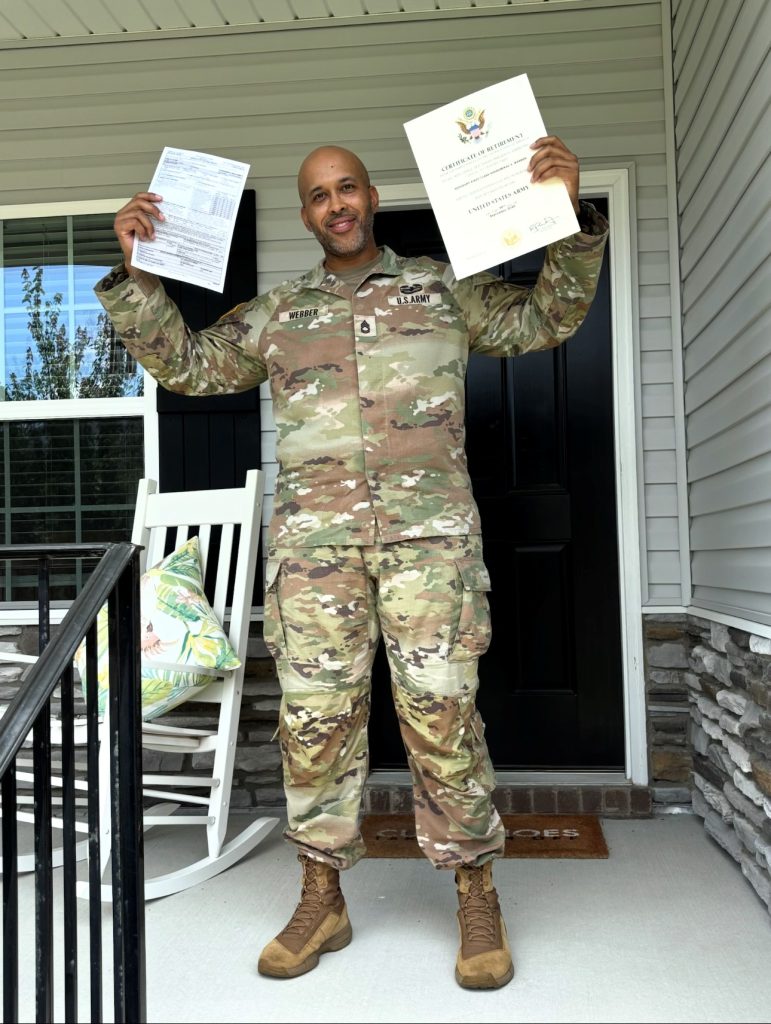
On the first day of August in 2025, I stood for a photo holding my retirement certificate alongside my DD214—my way of marking the end of 21 years of active Army service. It was a moment I had imagined countless times. I expected pride, and it was there, but what I didn’t expect was how the drive home would feel. With every mile, something shifted.
The structure that had shaped my life for over two decades was now behind me. The schedule, the expectations, the constant sense of purpose—all of it had been steady for so long that I hadn’t fully considered what its absence might feel like. That afternoon, every moment seemed to carry double meaning, a final salute to what had been, and a quiet introduction to what would come next. When I reached my front door, the weight of it settled in. Everything I had done over those 21 years had led
to this point, and now, for the first time in a long time, the path forward was entirely mine to choose. Military service prepares you for almost anything, except, perhaps, leaving it behind.
It teaches flexibility, discipline, and how to approach each mission with clarity and intent. It provides not just a job, but a framework for living. There’s a rhythm to it: where to be, what to do, who you serve alongside, and why it matters. In many ways, it becomes a complete system, one that supports you physically, mentally, and professionally. As long as you remain within it, that system holds. Stepping outside of it is different. It requires you to recreate that structure on your own. For many service members, that transition can feel uncertain, even overwhelming.
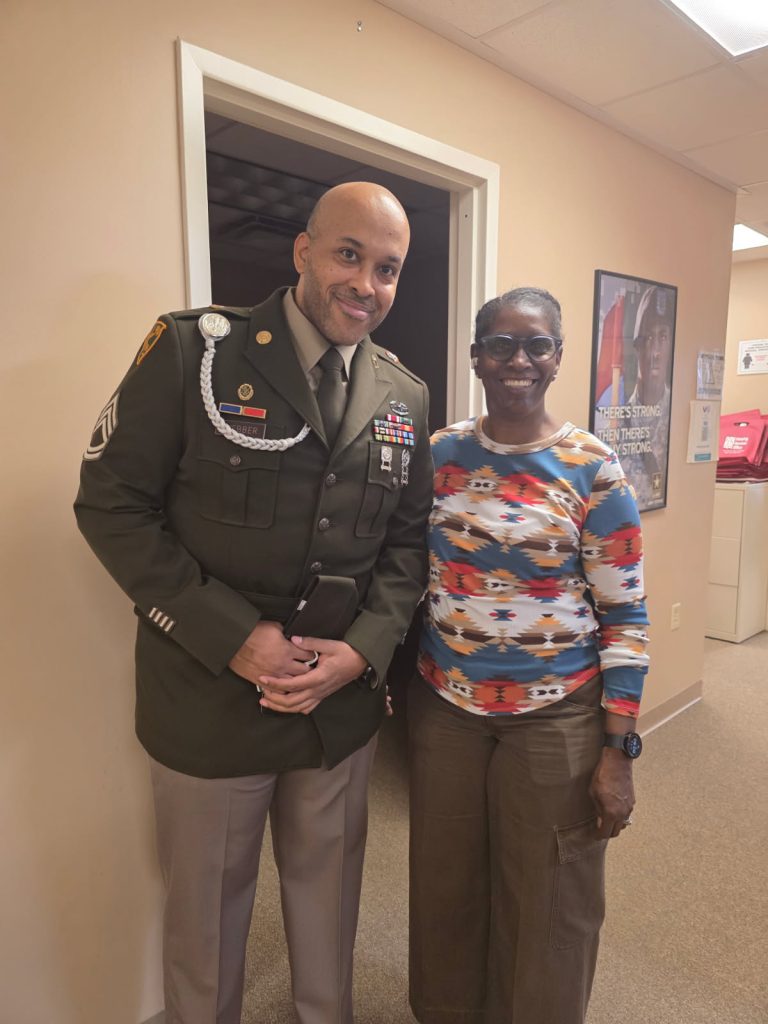
The military offers programs to prepare you for civilian life. Too often, they are treated as just a few more boxes to check on the way out. In reality, they are so much more. They are a bridge between what you’ve known and what comes next. The key is to recognize that your next mission doesn’t begin after you leave—it begins while you’re still serving.
Knowing my time in uniform would eventually come to an end, I made a decision early on to start preparing. While still on active duty, I pursued a degree and began building a business aligned
with my long-term goals. At the time, it was something I worked on after hours, balancing it alongside my responsibilities in the Army. What I didn’t realize then was how important that decision would
become. Having something already in motion gave me direction before I needed it. It wasn’t just a plan; it was a sense of purpose waiting for me on the other side of transition.
During my time as a military police soldier, specializing in physical security, my role was to evaluate how well organizations protect their people, assets, and operations. I reviewed plans, inspected systems, and advised leadership on ways to strengthen their defenses. Over time, I began to notice something:
Everything we were doing in the military had a direct parallel in the civilian world. Although the terminology was specific to the Army, the principles were the same. Leadership structures, accountability, risk management, and operational planning all existed beyond the military—just under
different names.
For example, a commander carries responsibilities that closely mirror those of a CEO. Both are responsible for the success of the mission, the performance of their teams, and the outcomes of their organization. These realizations changed the way I viewed my own experience because the skills we develop in uniform are not limited to military environments as they are translatable.
Still, even with preparation, the transition doesn’t always go according to plan. As I approached retirement, I intended to continue my service in a different capacity—as a government employee. It felt like a natural next step, and one that would allow me to stay connected to a familiar environment. But in late 2025, hiring freezes shifted that path in a way I did not anticipate. At first, it felt like a setback, but over time, it began to feel more like a new direction. The business I had started years earlier was no
longer just an idea or a side pursuit—it was the path forward. What once felt uncertain became an opportunity to apply everything I had learned in a new way.
Not everyone leaving the military will choose entrepreneurship (and not everyone needs to) but everyone faces the same question: What now? It’s a question that can feel daunting, but it’s also one filled with possibility. Your time in service has already equipped you with more than you may realize—discipline, adaptability, leadership, and the ability to work under pressure and as part of a team. These are not just military traits; they are qualities valued in every industry. Thus, the challenge is not to gain new skills; it is to recognize the value of the ones you already have.
Too often, service members leave the military thinking, “All I know how to be is a soldier.” In reality, what they know how to be is a leader, a problem-solver, and a professional who has operated in environments where accountability matters. Those experiences carry forward. They show up in how you lead, how you build, and how you respond when things don’t go as planned. Transitioning out of the military does not mean starting over; it means starting from experience.
Looking back now, I realize that the feeling I experienced on that drive home wasn’t just uncertainty, it was the understanding that, for the first time in a long time, I was stepping into a mission I would define for myself. That can be uncomfortable, but it can also be powerful. The structure may change, the environment may change, and the title may change, but the person you’ve become through your service does not— and that person is more prepared than you think. The mission isn’t over; it’s simply
changed. You’ve got everything you need to succeed, so let the leader you’ve become guide your next mission to victory.
